
Communicating with Clarity and Precision: Developing Communication Skills in Physical Education Classes.
When we think of physical education classes for 10-year-olds, we typically envision movement, games, and a lot of energy. However, these classes are also an excellent opportunity to work on fundamental cognitive and socioemotional skills — among them, the habit of mind known as “Communicating with Clarity and Precision.”
What does it mean to communicate with clarity and precision?
This habit of mind involves the ability to express thoughts, feelings, instructions, and ideas in a clear, structured, and understandable way for others. It is an essential skill for life in society, both at school and outside of it. For 10-year-olds, who are forming their social and cognitive identities, this habit helps to:
- Improve active listening and assertive speech;
- Avoid misunderstandings in games and group activities;
- Strengthen mutual respect and cooperation among peers;
- Developing a more organized mindset.
How can this habit be applied in Physical Education classes?
Physical Education classes offer a dynamic environment where communication is constantly required — whether in explaining rules, organizing teams, or resolving conflicts. Here are some practical strategies that teachers can adopt:
1. Modeling clear communication.
Before starting an activity, the teacher can demonstrate how to explain the rules clearly and objectively. For example, they can use short sentences, repeat the main points, and confirm that everyone understood. Please encourage students to do the same when explaining a game to their classmates.
2. Question and answer routines.
When introducing a new game, the teacher can ask students to reformulate the rules in their own words. This helps to check understanding and trains clarity in speech.
3. Reflections after the activity.
At the end of a class, it is a good idea to propose a quick discussion circle, where students share how they felt and what worked (or didn’t) in communication between classmates during the games. This practice develops awareness of how we express ourselves and listen to others.
4. Mediated conflict resolution.
When disagreements arise, the teacher can intervene by leading a mediated conversation, guiding students to express their feelings and points of view clearly, without accusations. It is a great learning opportunity.
Why does this matter?
By learning to communicate clearly and accurately from an early age, children become more self-confident, participatory, and aware of their role in groups. This directly impacts their self-esteem and their ability to relate healthily with others — on and off the court.
Physical Education, therefore, goes beyond the body. It is also a privileged space for the development of the mind, emotions, and human relationships. Cultivating habits such as clear communication is a way to prepare our students for a more balanced and empathetic life.

(PT-BR)
‘Hábitos da Mente’ no contexto da Educação Física: #9 Comunicar com Clareza e Precisão.
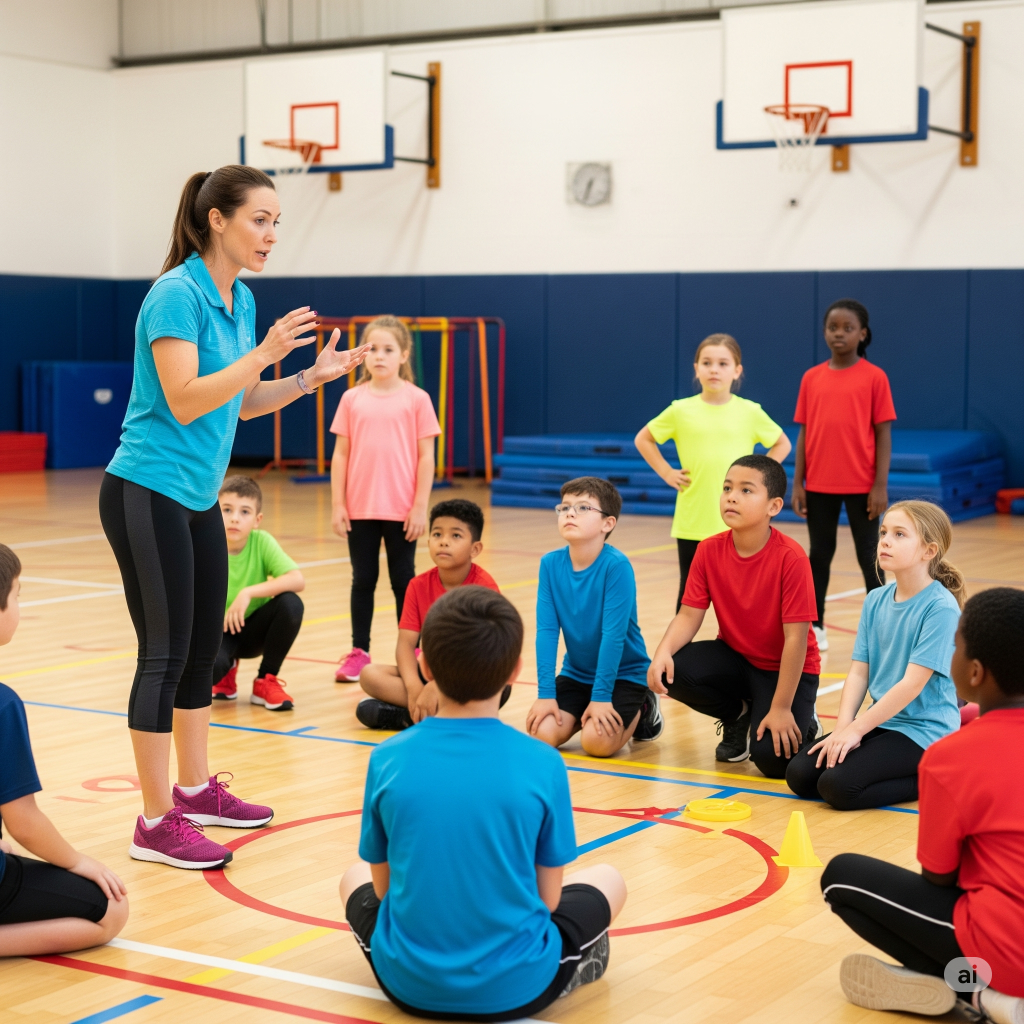
Comunicar com Clareza e Precisão: Desenvolvendo Habilidades de Comunicação nas Aulas de Educação Física.
Quando pensamos em aulas de Educação Física para crianças de 10 anos, normalmente imaginamos movimento, brincadeiras e muita energia. No entanto, essas aulas são também uma excelente oportunidade para trabalhar habilidades cognitivas e socioemocionais fundamentais — entre elas, o hábito da mente conhecido como “Communicating with Clarity and Precision”, ou em português, comunicar-se com clareza e precisão.
O que significa comunicar-se com clareza e precisão?
Este hábito da mente envolve a capacidade de expressar pensamentos, sentimentos, instruções e ideias de forma clara, estruturada e compreensível para os outros. É uma habilidade essencial para a vida em sociedade, tanto na escola quanto fora dela. Para as crianças de 10 anos, que estão em plena formação de sua identidade social e cognitiva, esse hábito ajuda a:
- Melhorar a escuta ativa e a fala assertiva;
- Evitar mal-entendidos em jogos e atividades em grupo;
- Fortalecer o respeito mútuo e a cooperação entre colegas;
- Desenvolver um pensamento mais organizado.
Como aplicar esse hábito nas aulas de Educação Física?
As aulas de Educação Física oferecem um ambiente dinâmico, onde a comunicação é constantemente exigida — seja na explicação de regras, na organização de equipes, ou na resolução de conflitos. A seguir, algumas estratégias práticas que os professores podem adotar:
1. Modelagem de comunicação clara.
Antes de iniciar uma atividade, o professor pode demonstrar como explicar as regras de forma clara e objetiva. Pode, por exemplo, usar frases curtas, repetir os pontos principais e confirmar se todos entenderam. Incentivar os alunos a fazerem o mesmo quando forem explicar uma brincadeira para os colegas.
2. Rotinas de perguntas e respostas.
Ao apresentar um novo jogo, o professor pode pedir que os alunos reformulem as regras com suas próprias palavras. Isso ajuda a verificar a compreensão e treina a clareza na fala.
3. Reflexões após a atividade
Ao fim de uma aula, é interessante propor uma roda de conversa rápida, onde os alunos compartilham como se sentiram e o que funcionou (ou não) na comunicação entre colegas durante os jogos. Essa prática desenvolve a consciência sobre como nos expressamos e ouvimos os outros.
4. Resolução de conflitos com mediação
Quando surgem desentendimentos, o professor pode intervir conduzindo uma conversa mediada, orientando os alunos a expressarem seus sentimentos e pontos de vista com clareza, sem acusações. É uma grande oportunidade de aprendizagem.
Por que isso importa?
Ao aprender a se comunicar com clareza e precisão desde cedo, as crianças se tornam mais autoconfiantes, participativas e conscientes de seu papel nos grupos. Isso impacta diretamente sua autoestima e sua capacidade de se relacionar de maneira saudável com os outros — dentro e fora da quadra.
A Educação Física, portanto, vai além do corpo. Ela também é um espaço privilegiado para o desenvolvimento da mente, das emoções e das relações humanas. E cultivar hábitos como a comunicação clara é uma forma de preparar nossos alunos para uma vida mais equilibrada e empática.




 felippe.net
Leave a comment