
Exploring the World with All Senses: Physical Education and the Habit of Mind “Gathering Data Through All Senses.”
In the world of learning, one of the most valuable habits of mind is “Gathering Data Through All Senses.” This habit emphasizes the importance of attentive listening, curious observation, exploratory touch, keen sense of smell, and conscious taste to understand the world around us. But how does this habit connect with Physical Education in the early grades of Elementary School?
Physical Education: a sensory laboratory in motion.
Physical Education is par excellence, a subject where the body and senses are in constant action. For children in Elementary School 1, it offers unique opportunities to explore the environment, their bodies, and others through rich and diverse sensory experiences. When a child runs barefoot on the grass, hear the sound of a ball bouncing, or notice the smell of a wet field after it rains, they are learning with all of their senses.
The body as an instrument of perception.
By proposing games, motor circuits, or traditional play, the Physical Education teacher can encourage students to engage all their senses in interpreting situations. For example:
- Vision: Observing the space, noticing the movement of classmates, and identifying colors and shapes of materials.
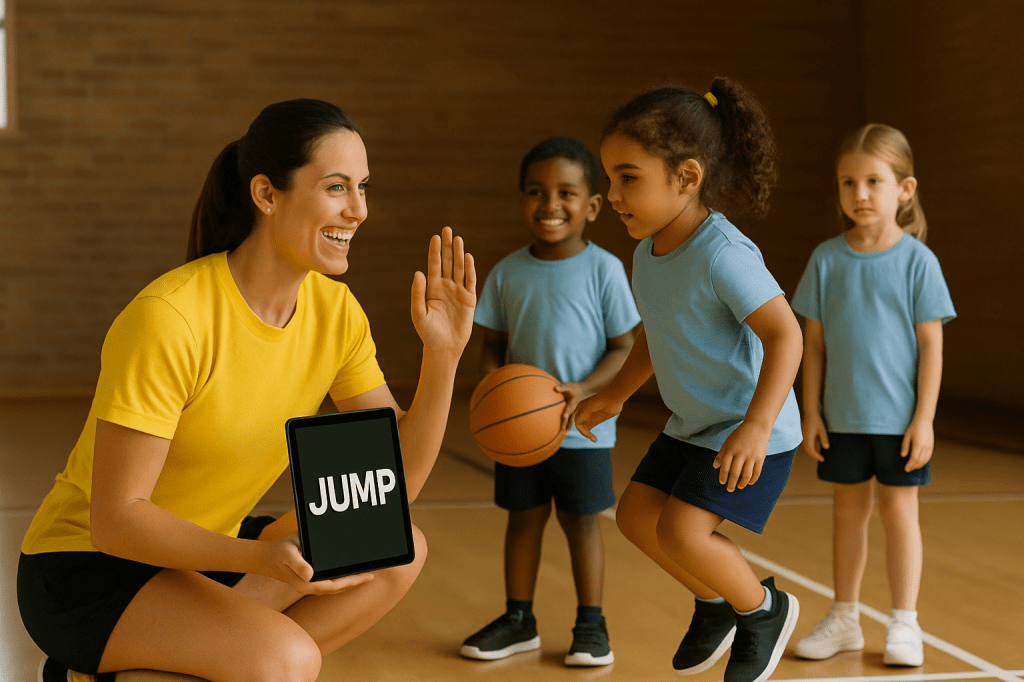
- Hearing: Listening to commands, musical rhythms, or the sounds produced by activities.
- Touch: Feeling the textures of balls, ropes, cones, or even the pressure of one’s own body in a controlled fall.
- Smell and taste: Although less frequently used in classes, they can be incorporated into themed activities related to healthy eating or nature, for example.
Developing attention and body awareness.
Stimulating the senses promotes body awareness, mindfulness, and cognitive development. Children who learn to perceive their movements, the environment, and others with greater sensitivity become more confident and aware of their actions. Furthermore, by using all their senses, they increase their ability to interpret situations, solve motor problems, and collaborate with their peers.
Pedagogical practices that encourage the habit.
Some strategies that teachers can adopt to develop the habit of “Gathering Data Through All Senses” in Physical Education classes are:
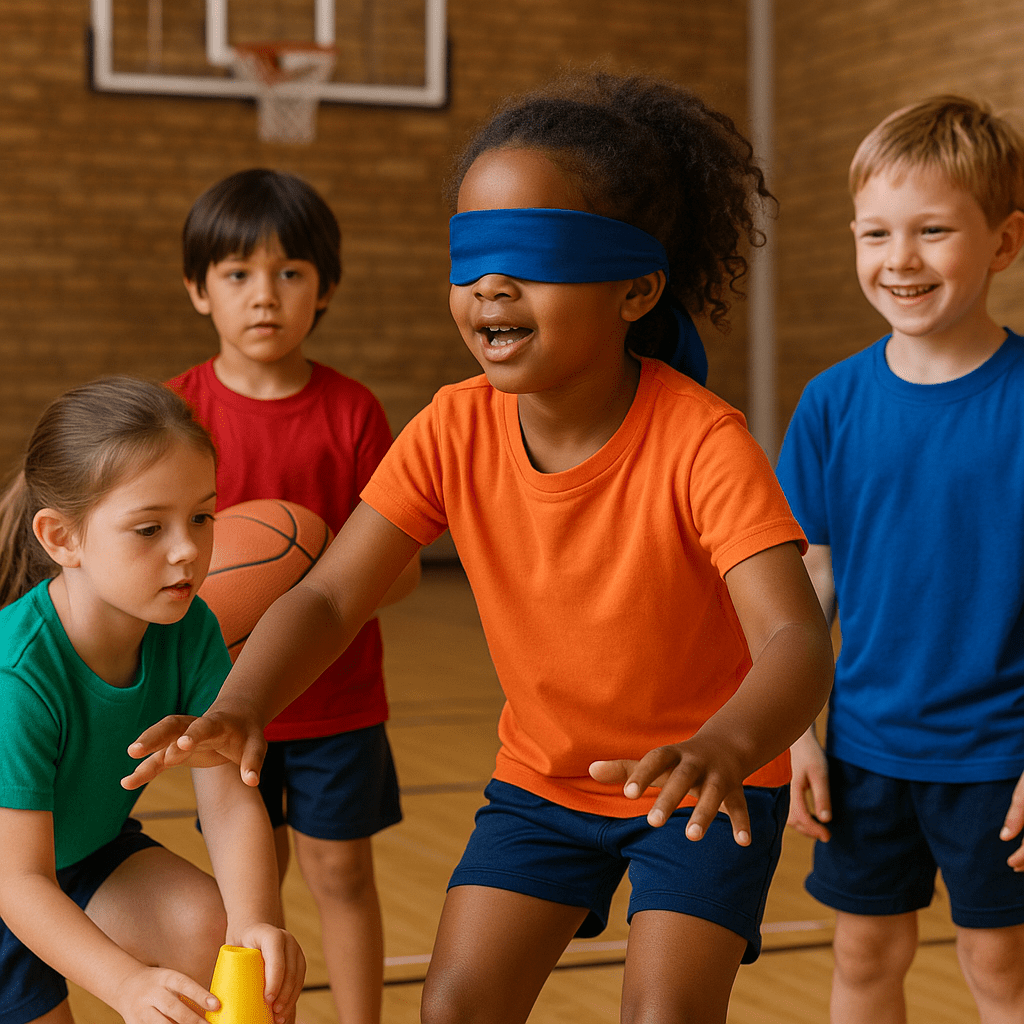
- Propose sensory games, such as blindfolded circuits, tactile challenges, or auditory guessing games.
- Please encourage students to describe the sensations they experience during class orally.
- Connect activities with other areas of knowledge, such as the arts and sciences, to create more integrated learning.
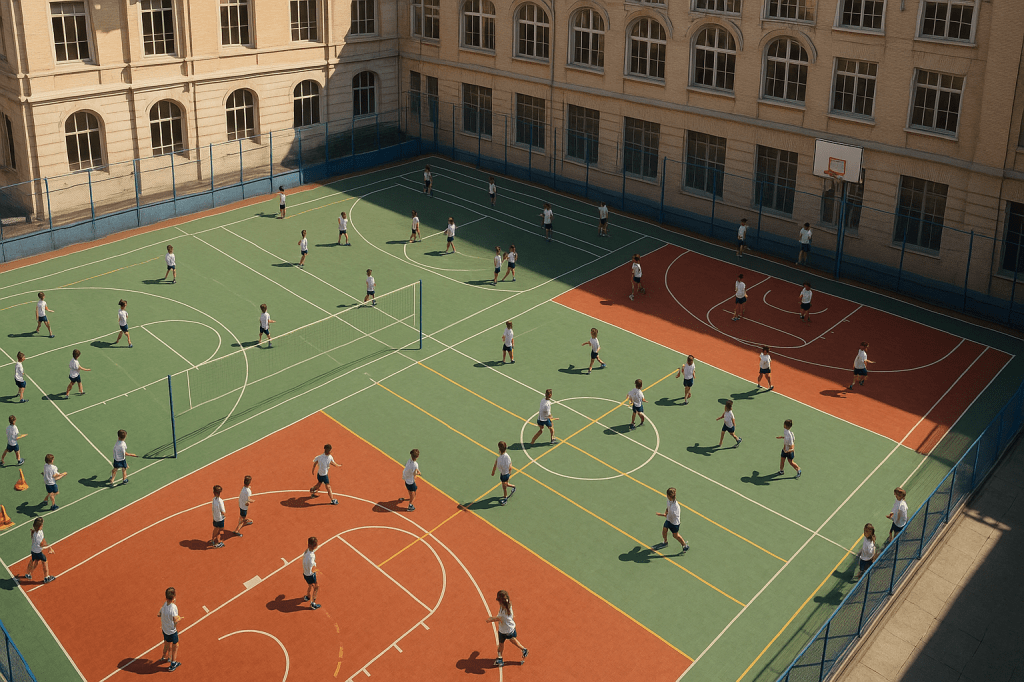
- Vary the environments in which they practice: gyms, playgrounds, parks, or sensory rooms.
Conclusion
By encouraging students to gather information with all their senses, Physical Education contributes to deeper, more meaningful, and integrated learning. This habit of mind, when cultivated from an early age, transforms the way children interact with the world, making them more curious, observant, and open to experiences. There is nothing better than movement, play, and the body in action to awaken all the senses and, with this, promote lively and lasting learning.

(PT-BR)
‘Hábitos da Mente’ no contexto da Educação Física: #11 Recolher Dados Por Meio de Todos os Sentidos.
No universo do aprendizado, um dos hábitos da mente mais valiosos é o “Gathering Data Through All Senses”, ou em português, “Recolher dados por meio de todos os sentidos”. Esse hábito valoriza a importância da escuta atenta, do olhar curioso, do toque exploratório, do olfato aguçado e do paladar consciente para entender o mundo ao nosso redor. Mas como esse hábito se conecta com a Educação Física nas séries iniciais do Ensino Fundamental?
Educação Física: um laboratório sensorial em movimento.
A Educação Física é, por excelência, uma disciplina onde o corpo e os sentidos estão em constante ação. Para as crianças do Ensino Fundamental 1, ela oferece oportunidades únicas de explorar o ambiente, o próprio corpo e os outros por meio de vivências sensoriais ricas e diversificadas. Quando uma criança corre descalça na grama, escuta o som da bola quicando ou percebe o cheiro do campo molhado depois da chuva, ela está, de fato, aprendendo com todos os sentidos.
O corpo como instrumento de percepção.
Ao propor jogos, circuitos motores ou brincadeiras tradicionais, o professor de Educação Física pode estimular os alunos a usarem todos os seus sentidos para interpretar as situações. Por exemplo:
- Visão: Observar o espaço, perceber a movimentação dos colegas, identificar cores e formas dos materiais.
- Audição: Ouvir comandos, ritmos musicais ou os sons produzidos pelas atividades.
- Tato: Sentir texturas de bolas, cordas, cones ou até mesmo a pressão do próprio corpo em uma queda controlada.
- Olfato e paladar: Embora menos utilizados nas aulas, podem ser incluídos em atividades temáticas ligadas à alimentação saudável ou natureza, por exemplo.
Desenvolvendo atenção e consciência corporal.
Estimular os sentidos favorece a consciência corporal, a atenção plena e o desenvolvimento cognitivo. Crianças que aprendem a perceber seus próprios movimentos, o ambiente e os outros com mais sensibilidade, tornam-se mais seguras e conscientes em suas ações. Além disso, ao utilizarem todos os sentidos, ampliam sua capacidade de interpretar situações, resolver problemas motores e colaborar com os colegas.
Práticas pedagógicas que incentivam o hábito.
Algumas estratégias que os professores podem adotar para desenvolver o hábito de “Gathering Data Through All Senses” nas aulas de Educação Física são:
- Propor jogos sensoriais: como circuitos com os olhos vendados, desafios táteis ou jogos de adivinhação auditiva.
- Estimular a descrição oral das sensações vividas durante a aula.
- Conectar as atividades com outras áreas do conhecimento, como artes e ciências, criando uma aprendizagem mais integrada.
- Variar os ambientes de prática: ginásios, pátios, parques ou salas sensoriais.
Conclusão
Ao estimular os alunos a recolher informações com todos os sentidos, a Educação Física contribui para uma aprendizagem mais profunda, significativa e integrada. Esse hábito da mente, quando cultivado desde cedo, transforma a forma como as crianças interagem com o mundo, tornando-se mais curiosas, observadoras e abertas às experiências. E nada melhor do que o movimento, a brincadeira e o corpo em ação para despertar todos os sentidos e, com isso, promover um aprendizado vivo e duradouro.





 felippe.net
Leave a comment