
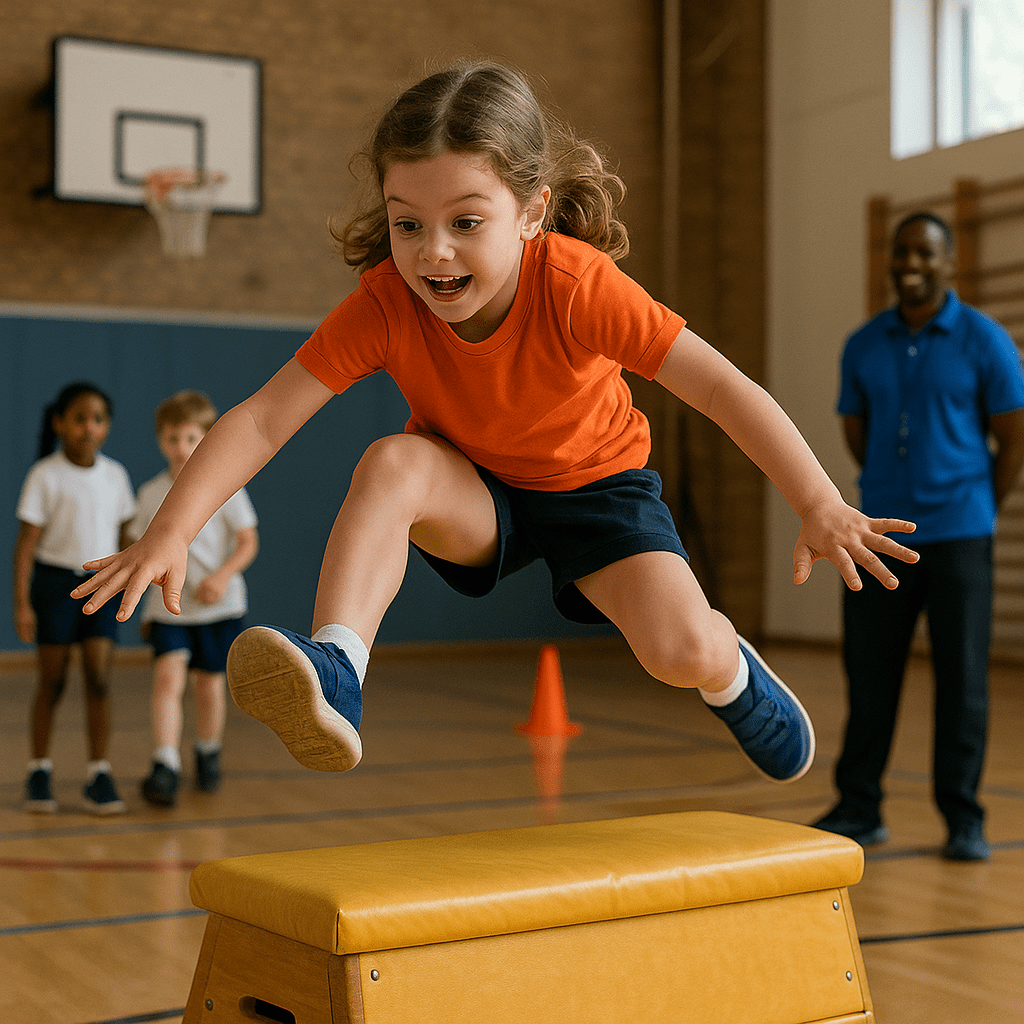
Taking Responsible Risks: How Physical Education Helps Children Grow Up with Courage and Awareness.
In childhood, every new step is a small risk. Learning to walk, climbing a slide, trying a new game — everything involves facing the unknown. In the context of school, especially in Physical Education classes, this experience intensifies and transforms into an educational opportunity. It is in this scenario that the habit of mind “Taking Responsible Risks” — or, in Portuguese, “Assumir Riscos com Responsabilidade” — stands out as an essential tool in the development of children in Elementary School 1.
What does it mean to take responsible risks?
Taking responsible risks involves acting with caution and avoiding situations that put you in danger. On the contrary, it is about evaluating possibilities, trusting in your abilities, facing challenges with courage, and learning from the results, whether positive or not. It is an exercise in self-confidence combined with responsibility.
Physical Education: a safe space to take risks and grow.
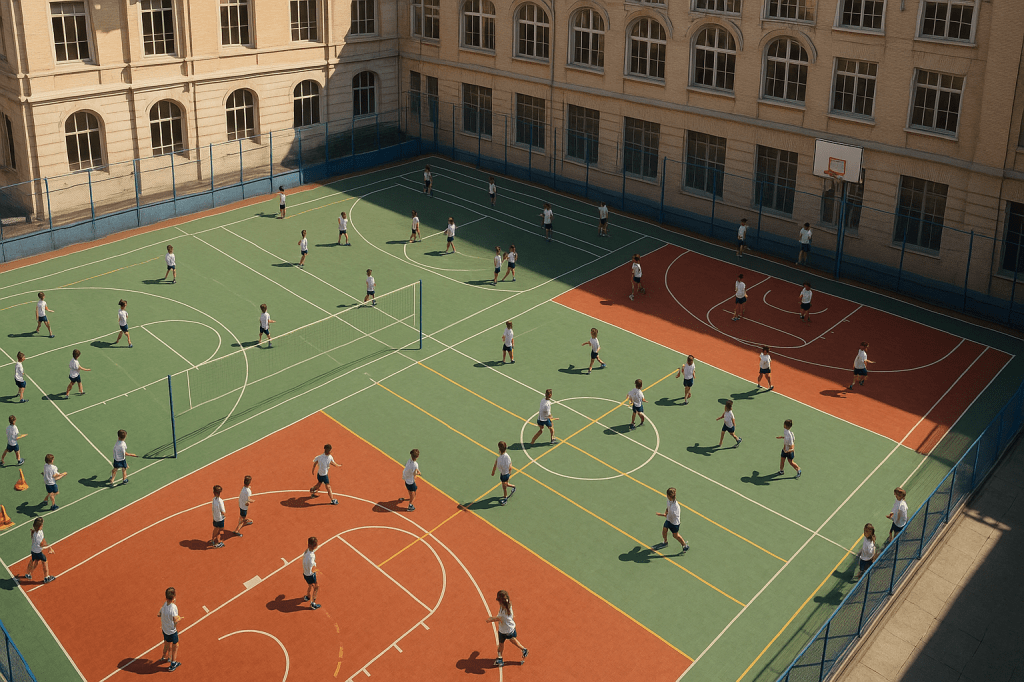
Physical Education classes are a natural laboratory for developing this habit. By proposing activities such as motor circuits, cooperative games, adapted sports, and outdoor games, the teacher creates situations in which the student must leave their comfort zone.
For example:
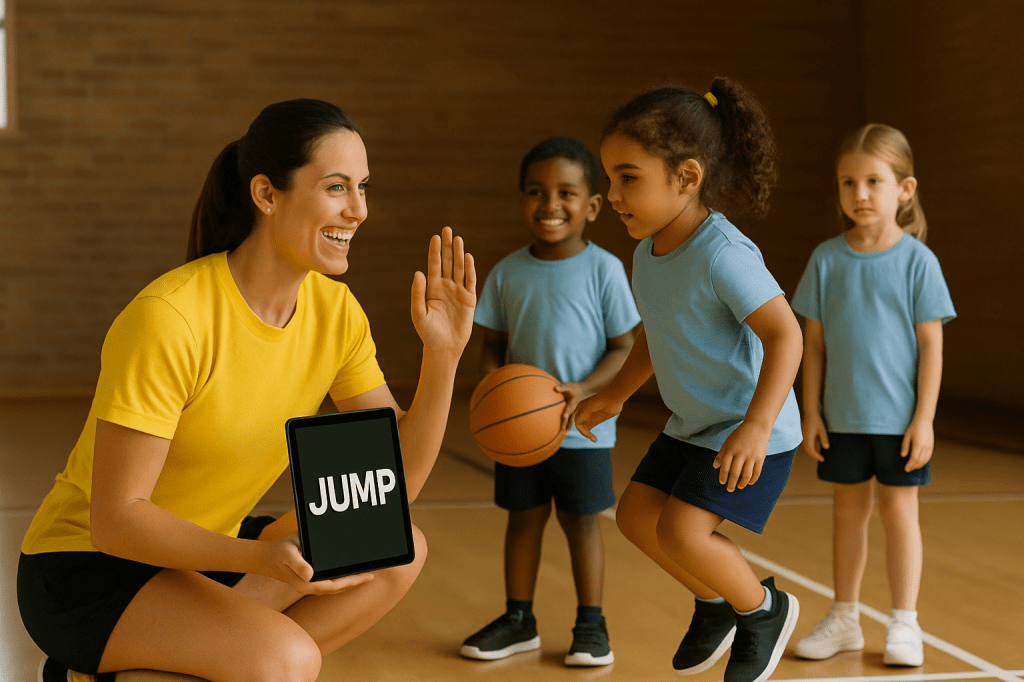
- A child who has always been afraid of jumping over an obstacle discovers that they can do it when they try.
- A student who avoids playing with other students due to insecurity takes the risk of participating and learns the value of collaboration.
- In a game, by opting for a less safe but innovative strategy, the child deals with the result and understands the importance of trying something new responsibly.
Error as part of the process.
When taking risks, error is possible — and expected. Therefore, Physical Education also teaches how to deal with frustration, reflect on what can be done differently, and try again. This cycle of trial, error, and overcoming is essential to building resilience and autonomy.
The role of the teacher.
The physical educator plays a crucial role in this process. They must:
- Encourage experimentation safely.
- Value effort and not just the result.
- Create a supportive, non-judgmental environment.
- Reinforce the idea that responsible risk-taking is part of learning.
Conclusion
Teaching children to take responsible risks from an early age prepares them for life’s challenges. In Physical Education, this happens in a practical, playful, and meaningful way. When a child takes risks, they grow. When they are responsible for that risk, they learn to grow with courage, empathy, and awareness.
(PT-BR)
‘Hábitos da Mente’ no contexto da Educação Física: #13 Assumir Riscos com Responsabilidade.
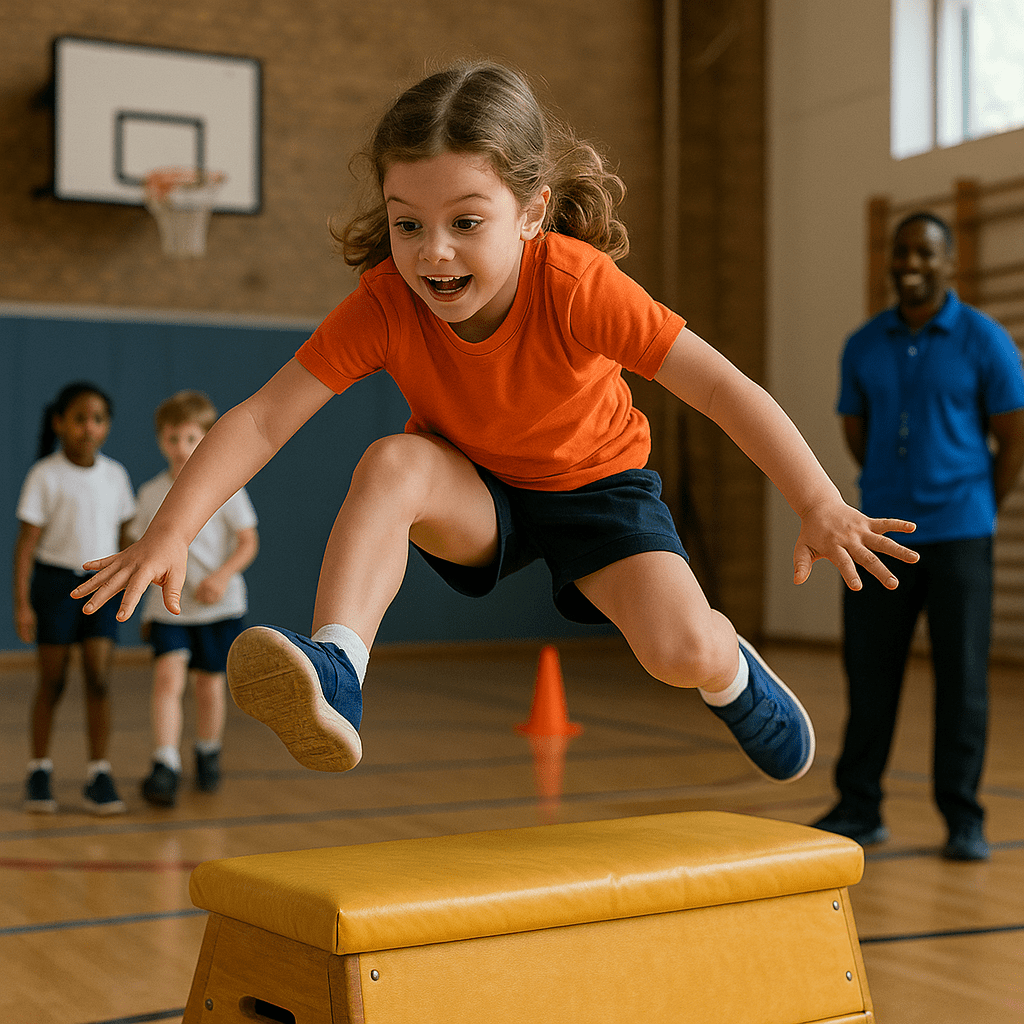
Assumindo Riscos com Responsabilidade: Como a Educação Física Ajuda Crianças a Crescer com Coragem e Consciência. Na infância, cada novo passo é um pequeno risco. Aprender a andar, subir no escorregador, experimentar uma nova brincadeira — tudo envolve enfrentar o desconhecido. No contexto da escola, especialmente nas aulas de Educação Física, essa vivência se intensifica e se transforma em oportunidade educativa. É nesse cenário que o hábito de mente “Taking Responsible Risks” — ou, em português, “Assumir Riscos com Responsabilidade” — ganha destaque como ferramenta essencial no desenvolvimento das crianças do Ensino Fundamental 1.
O que significa assumir riscos com responsabilidade?
Assumir riscos responsáveis não é agir por impulso ou colocar-se em perigo. Pelo contrário, trata-se de avaliar possibilidades, confiar nas próprias habilidades, enfrentar desafios com coragem e aprender com os resultados, sejam eles positivos ou não. É um exercício de autoconfiança aliado à responsabilidade.
Educação Física: um espaço seguro para arriscar e crescer.
As aulas de Educação Física são um laboratório natural para o desenvolvimento desse hábito. Ao propor atividades como circuitos motores, jogos cooperativos, esportes adaptados e brincadeiras ao ar livre, o professor cria situações em que o aluno precisa sair da sua zona de conforto.
Por exemplo:
- Uma criança que sempre teve medo de saltar sobre um obstáculo, ao tentar, descobre que é capaz.
- Um aluno que evita jogar com outros colegas por insegurança, assume o risco de participar e aprende o valor da colaboração.
- Em um jogo, ao optar por uma estratégia menos segura, mas inovadora, a criança lida com o resultado e compreende a importância de tentar algo novo com responsabilidade.
O erro como parte do processo.
Ao assumir riscos, o erro é possível — e esperado. Por isso, a Educação Física também ensina a lidar com frustrações, refletir sobre o que pode ser feito de forma diferente e tentar novamente. Esse ciclo de tentativa, erro e superação é fundamental para construir resiliência e autonomia.
O papel do professor.
O profissional de educação física tem papel essencial nesse processo. Ele deve:
- Incentivar a experimentação com segurança.
- Valorizar o esforço e não apenas o resultado.
- Criar um ambiente de apoio, sem julgamentos.
- Reforçar a ideia de que o risco responsável é parte do aprendizado.
Conclusão
Ensinar crianças a assumir riscos responsáveis desde cedo é prepará-las para os desafios da vida. Na Educação Física, isso acontece de forma prática, lúdica e significativa. Quando uma criança se arrisca, ela cresce. E quando esse risco é responsável, ela aprende a crescer com coragem, empatia e consciência.



 felippe.net
Leave a comment