
What is this exactly? At first, here is the definition of ‘Cerol’ (in Brazil) or ‘Manja’ (in Asia). Take a look at this:
”Kite lines coated with cerol (in Brazil) or manja (in Asia) are strings coated with a mixture of ground glass and glue to make them extremely sharp and capable of cutting other kite lines during a competitive sport called kite fighting. This practice is illegal in many regions, including São Paulo, due to the severe risk of injury to the user and the public, with penalties ranging from fines to imprisonment. The abrasive strings have caused serious injuries, including fatal neck injuries, and also maim and kill birds.”
Definition generated by AI.
What they are?
- A type of kite string, also known as cerol, linha chilena, or manja, that is coated with a mixture of glue and powdered glass.
- Primarily used in kite fighting, a competitive sport where the goal is to cut the opponent’s kite string.
Why they are dangerous?
- Cause severe injuries: The glass-coated strings can cause severe injuries to humans, including deep cuts and fatal cervical injuries, from accidental contact.
- Harm birds: The sharp strings also pose a significant threat to birds, leading to high numbers of injured or dead birds annually.
- Illegal in many places: The production, sale, and use of these abrasive strings are prohibited in many parts of the world due to the danger they pose to the public.
Legal consequences and efforts to stop them.
- Penalties: Violators can face significant fines or jail time for selling, possessing, or using cerol. For example, in São Paulo, the fine for non-compliance is around R$ 1.326,50.
- Public awareness: Campaigns like “No Cerol!” and “Cerol Kills” have been launched to raise public awareness about the dangers of these strings.
- Law enforcement: Authorities are working to enforce bans, though it can be difficult to track down illegal users.
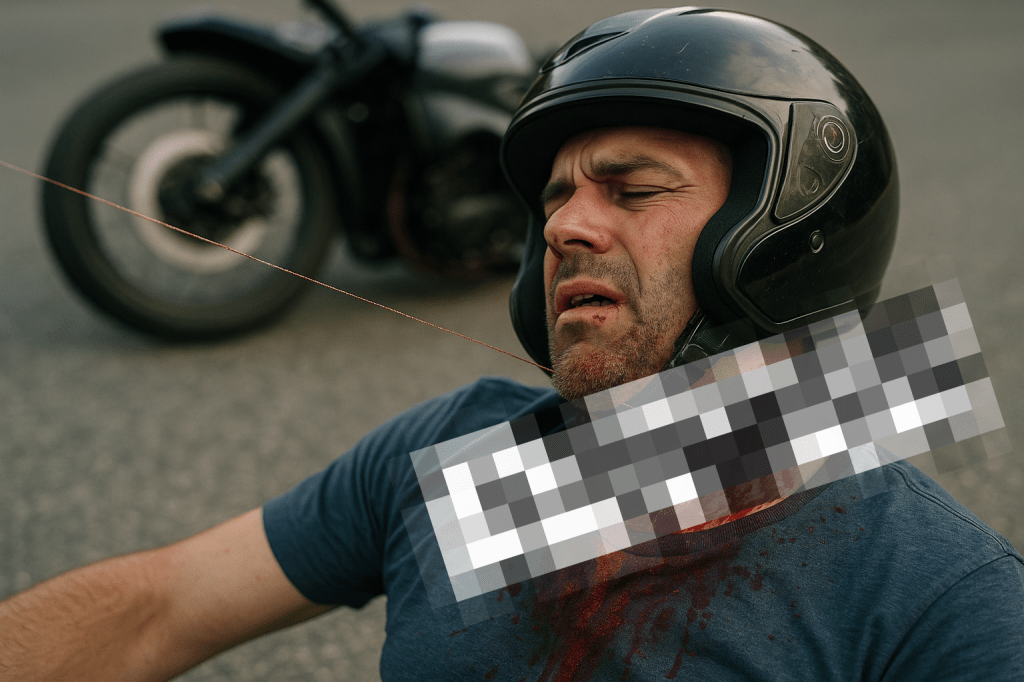
The thin, fatal line — how “cerol” (glass-coated kite string) kills motorcyclists and cyclists.
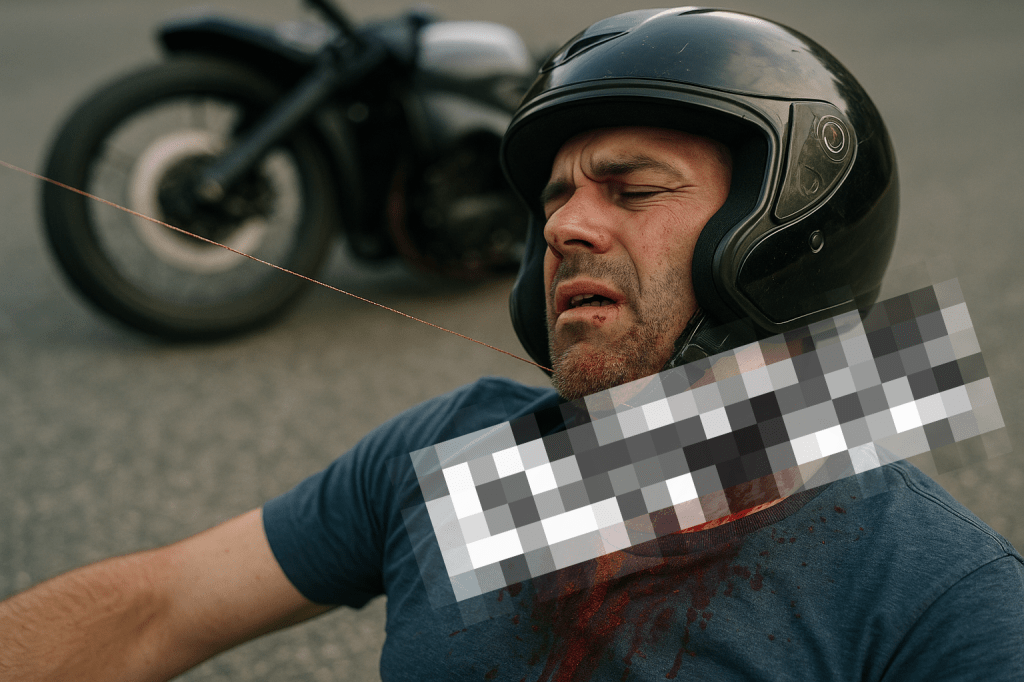
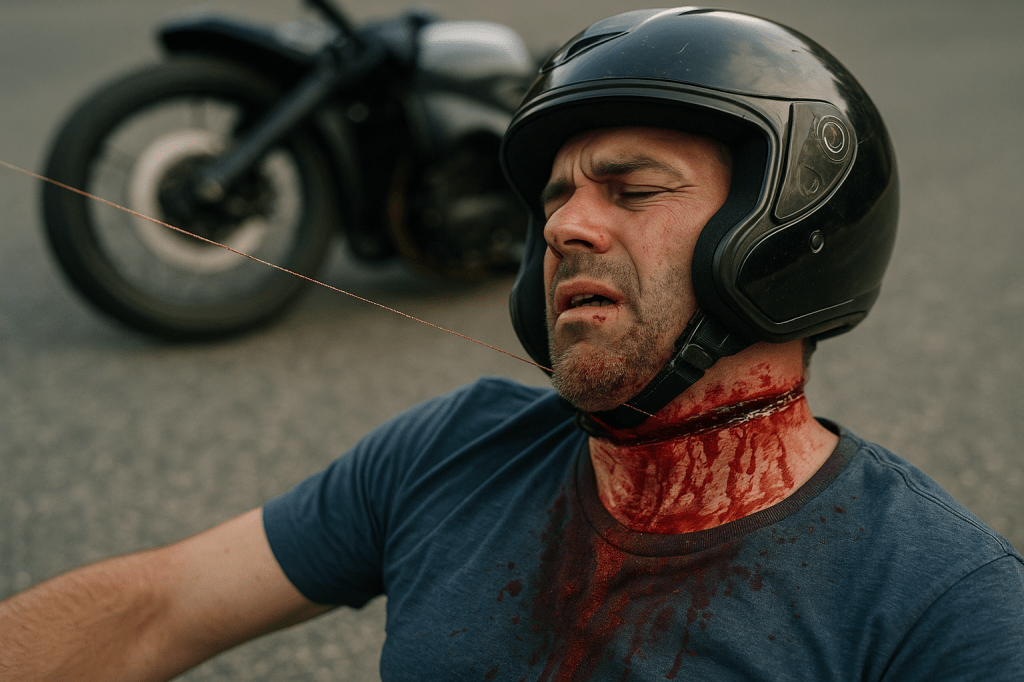
Images generated by AI (1st censured).
A sky of color. A string of light. And — in an instant — a razor humming across a throat. What feels like childhood play becomes a silent blade for anyone who rides beneath it.
What it is: In Brazil the dangerous cutting line is commonly called cerol (elsewhere known as manja, manjha or “glass-coated kite string”). It is made by coating a kite thread (traditionally cotton, increasingly synthetic cord) with an adhesive paste and finely powdered abrasive — most often crushed glass, sometimes mixed with other hard powders — turning the line into a knife stretched across the air. Wikipedia+1
How it’s made (short, concrete): makers bind many layers of thread, apply a glue or starch paste (recipes vary: rice glue, tree gums or industrial adhesives), then embed very fine glass dust or other abrasives while the paste is still tacky. The process is repeated to ensure the abrasive is bonded to the fibre; industrially produced synthetic variants are even stronger and harder to see. Homemade methods sometimes grind fluorescent tube glass or bottles into powder; commercial “Chinese manja” is often nylon coated mechanically with abrasives. dsource.in+1
The injuries: These coated lines cut like wire. For motorcyclists and cyclists the most common and most catastrophic scenarios are:
- deep neck lacerations that sever major blood vessels or the airway (often rapidly fatal),
- facial and head wounds even when helmets are worn,
- severe cuts to arms or hands that can cause amputation or massive blood loss,
- secondary crashes when riders are cut or hit by the falling kite/string, producing fractures, head trauma or death. Medical case series and trauma reviews document throat and cervical injuries, amputations and deaths directly attributable to these strings. PMC+1
Numbers and scale (Brazil and the world):
- There is no single official national tally in Brazil; government reporting is fragmented. However, a non-profit hotline in Rio State recorded more than 2,800 reports of illegal use of cutting lines there since 2019 — a striking indicator of scale in just one state. AP News
- Hospital and trauma studies show hundreds of victims at single centres in multi-year spans: for example, a trauma-hospital study in Belo Horizonte recorded 211 victims of powdered-glass kite-line injuries between 2005 and 2009 (mostly males; many injuries affected the neck and occurred while driving). That study also documented fatalities linked to neck injuries in motorcyclists. These local studies show the real human toll even when national numbers are absent. SciELO+1
- Internationally, the same problem appears across kite-fighting traditions: South Asia (India, Pakistan, Nepal), Chile, parts of the Middle East and elsewhere report similar maiming and fatal events — case reports and series from multiple countries describe slit throats and fatal neck wounds caused by glass-coated lines. In short: this is not a local curiosity, it is a global public-health hazard where abrasive kite lines are used. PMC+1
Why it’s especially dangerous for two-wheelers: Riders sit exposed, often at speeds that make an unseen taut line impossible to react to. A thin, nearly invisible cord at neck height can cut in a fraction of a second; helmets sometimes reduce injury but cannot always stop a deep cervical cut. Secondary crashes from sudden jerks or falls multiply the danger. PMC
Prevention and what works: Education alone has limits. Effective measures documented or suggested in reports and news coverage include: banning manufacture and sale (and enforcing bans), clean-sky designated kite-fighting zones far from roads, seizure of illegal threads, public distribution of line-cutting tools for riders and protective guards on motorcycles, targeted law enforcement during kite-flying festivals, and awareness campaigns for both flyers and road users. Several Brazilian states and municipal authorities have passed restrictions; federal measures have been proposed. AP News+1
A final word (poetic, necessary): The sky is a commons. Children should learn the mechanics of wind and wonder, not the calculus of harm. A bright kite can teach patience and joy; a coated string teaches only how to wound. If we care for those who ride the city — couriers, students, parents — we must choose rules, design safer traditions, and refuse the normalisation of deadly toys.
Opinion
As a biker (motorbike and bike), I share the danger posed by kite lines coated in cerol here in Brazil. We have to protect ourselves by wearing special clothes, such as a chin strap with steel cables inside to block the kite line from cutting our jugular. Yeah, you heard me well, to avoid being cut by kite lines and dying.

I was searching for English-language sources to share this content, but I didn’t find any, so I’m sharing a public health problem in Brazil. We are establishing laws yet; they are not efficient enough to forbid people from playing with kites with cerol.
Protection provided by Brazilian companies to prevent death from kite lines coated with cerol.
1. Kite line cutter:
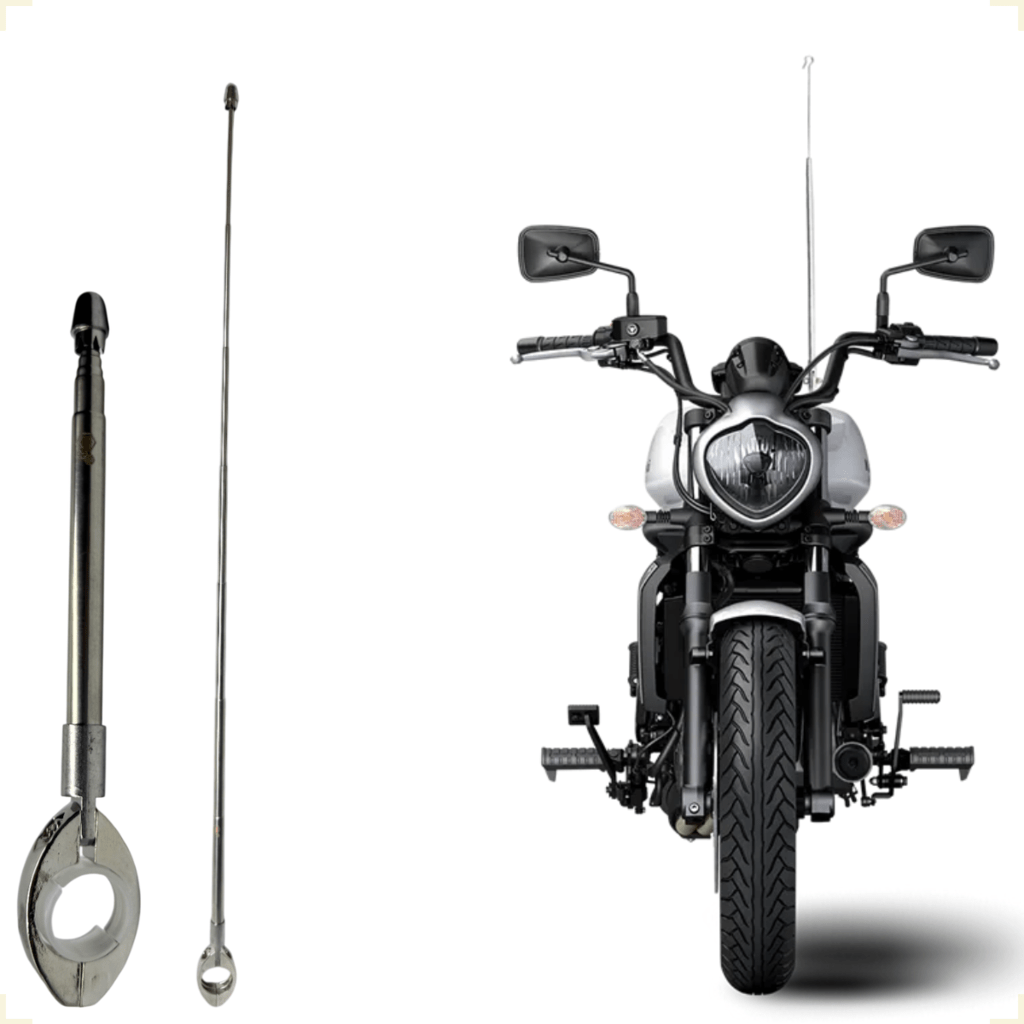
Kite line cutter to prevent accidents with kite lines coated with cerol.
2. Neck protection:
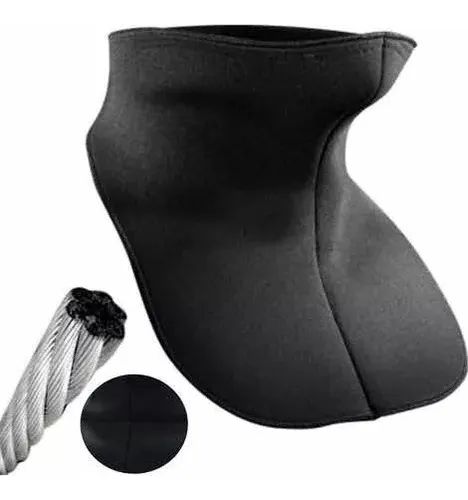
Neck protection with steel cables inside it.
Selected sources and further reading.
(Used for the facts above — key references you can quote or link.)
- Associated Press — Plaything or peril? Brazilian kites are slashing throats and prompting a push for a national ban. (report on Rio statistics and the MovRio hotline). AP News
- Ladeira RM et al., Study of victims attended in a trauma hospital (Belo Horizonte) — powdered glass-coated kite line injuries (Scielo / RB Epidemiol). Local hospital series with counts and clinical details. SciELO
- Muvalia G., et al., Kite-string injuries: a case series (International Journal of Critical Illness and Injury Science; case series describing severe and sometimes fatal injuries). PMC
- Wikipedia — Manja (string) (summary of composition, traditional & modern materials and hazards). Useful quick reference on composition and names like manja, cerol, manjha. Wikipedia
- Practical descriptions of the craft (making process / glass coating): DSource / Instructables / factory videos showing how threads are coated with adhesive and glass powder (documenting the real techniques used). dsource.in+1
Brazilian youtuber testing kite lines coated with cerol. This is impressive!







 felippe.net
Leave a comment